
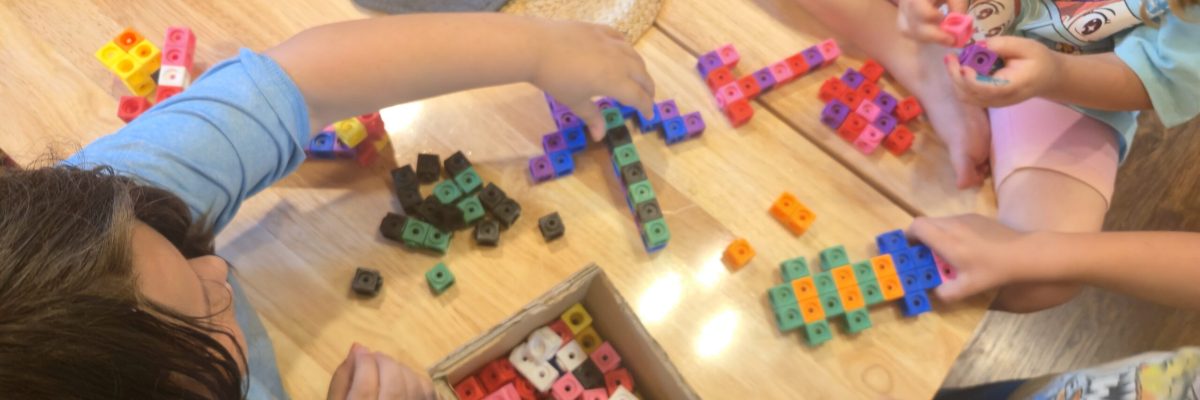
I remember from my own school experience (you probably do, too!) how easily an educator can ruin a subject by making it boring. At WonderWild learning is never boring! Our learning center is based on play and self-directed learning. The young people choose their own goals and how they spend their time. They have the freedom to engage in uninterrupted, unstructured play.
Early childhood educators say “all play is learning“, and they focus on the many proven benefits of play. Unfortunately, as children get older, programs tend to switch focus from play to academic learning with measurable outcomes. But you don’t have to choose one or the other! With the right vision, all learning is play, too, and there’s no reason to lose sight of the curiosity and wonder of early childhood.
Even though WonderWild is currently open to young people up to age 9, we get the most enrollment interest from families with 5- and 6- year olds. That brings up the interesting question: “Is play-based learning only for younger children?”
Let’s start with some definitions.
What exactly is play?
Play isn’t just anything that looks fun at first glance. In the research about play, it’s defined with a few key components. Play is:
- Pleasurable and enjoyable, spontaneous and voluntary. If it’s miserable or forced, it’s not play.
- Self-chosen and intrinsically motivated. The young person freely chooses the activity because it’s enjoyable, not because there’s a reward at the end.
- Active and engaged. Simply watching isn’t play.
- Self-directed. The young people themselves decide the rules and structure that guide the play.
- Imaginative and stress-free. It flows creatively and doesn’t create pressure.
Looking at these criteria, you can determine whether an activity is truly play. Take participation in sports, for example. Sports typically have an external set of rules and structure, and they can come with a lot of stress and pressure. While participating in the sport may be enjoyable, even playful, it’s not what researchers would define as play.
Or imagine yourself undertaking a crafting hobby. If you’re pursuing a specific outcome, doing it for money, or feeling a time crunch, it’s not play. However, if you’re doing it just for fun and getting creative with the materials, it may be play!
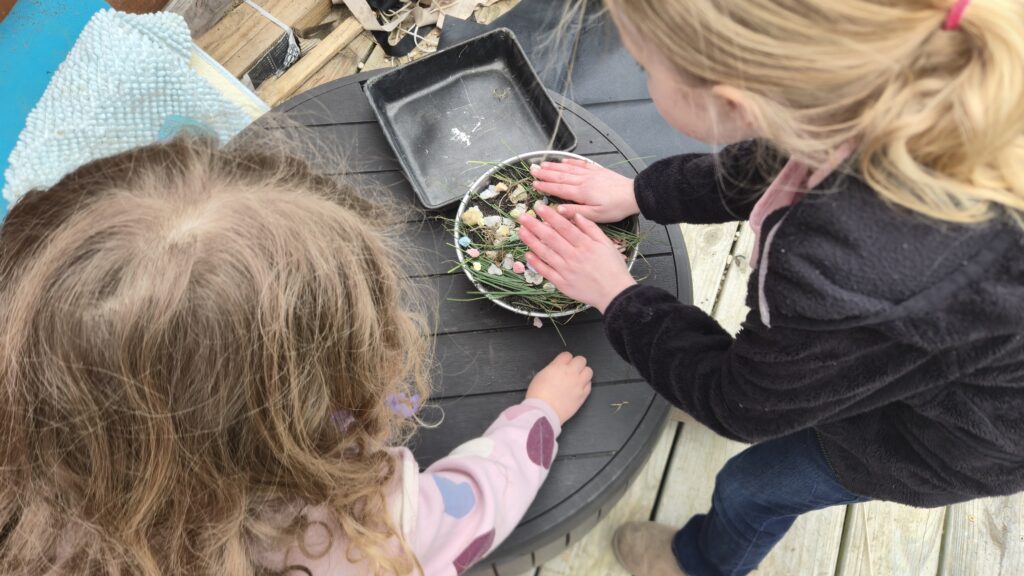
What is play-based learning?
Play-based learning is an education method where young people learn through exploring, experimenting, and problem-solving while also having fun. The teacher’s role changes from being the presenter of information to being a side-by-side guide along the journey. Learners are seen as active participants in the process instead of passive receivers of knowledge.
Play-based learning can include free play (the type of play defined above) or guided play. Guided play is an attempt to find a middle ground between pure play and the desire for specific educational outcomes. The educator initiates fun, playful activities that relate to desired outcomes. The teacher guides the activity while the learners have some freedom about exactly how they participate.
WonderWild combines both free play and guided learning, while staying firmly grounded in choice and autonomy. Learners are sometimes offered guided activities (we call them “invitations”) that relate to academic goals. However, they always have the choice of whether to engage with these activities. And if they tend to not engage, we’ll go back to the drawing board and figure out something more fun! We believe that all learning can be fun! It’s just that grownups have a tendency to make things boring. We let the kids’ interests guide the way. They pretty clearly let us know what is and isn’t playful enough!
Benefits of Play-Based Learning
Play offers enormous benefits to young people, and this is backed up by a wide body of research. Some of the areas that play supports include:
Cognitive Development – Play helps young people build executive functioning skills, including self-control, attention, memory, problem-solving, and mental flexibility.
Emotional Well-being – Play gives young people the safety and freedom to explore their emotions and learn how to express them. Through play, children build resilience and coping strategies. Play supports the development of important qualities like persistence, confidence, independence, initiative, and personal responsibility.
Social Skills – When they play together, children learn cooperation, patience, negotiation, and conflict resolution. They learn to navigate social dynamics, share, and take turns. They learn how to understand the feelings and needs of other people, and they learn how to communicate their needs to others.
Language Development – Play encourages conversations between young people, introducing new words and language patterns in a relevant and authentic way. Learners in play-based learning programs have shown greater narrative skills and grammatical knowledge than those in more traditional programs.
Relationship to Learning – When children play, they are invested in activities they’ve chosen based on their own interests. This leads to increased curiosity and a greater willingness to try new things. People at play deeply engage with their own learning. They develop deeper skills mastery and build strong lifelong learning habits. Play-based learning is associated with better academic outcomes.
Future-Proof Skills – Play gives young people skills that increase their “employability” in an uncertain future. They learn to solve problems, think creatively, build healthy relationships, collaborate, communicate, test their theories, and safely take risks.
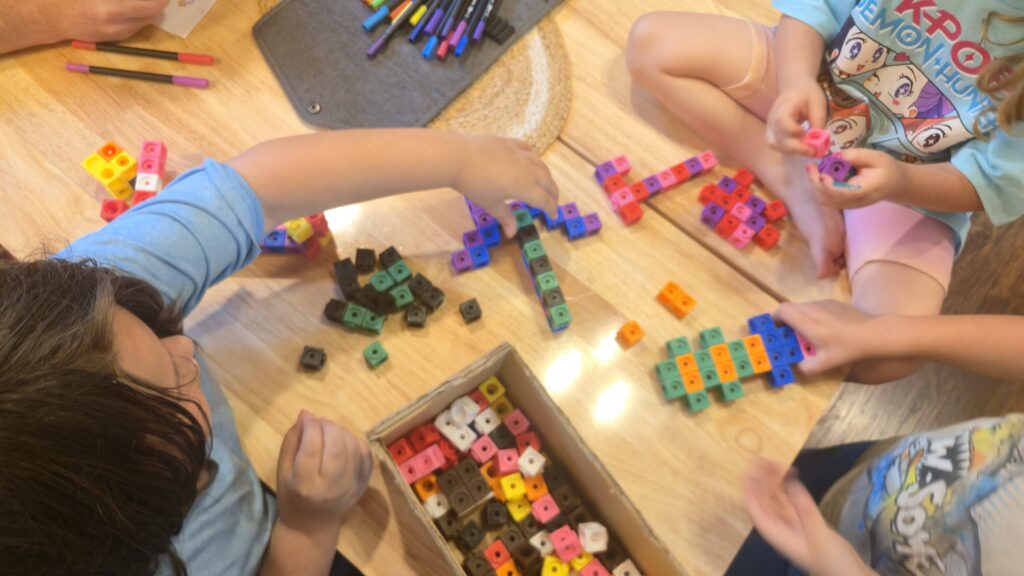
Play-Based Learning For Older Children
Play-based learning has increased in popularity over recent years. However, the idea is most popular for preschool and early elementary students.
Play looks different with older learners. Pretend play with preschoolers might look like dress-up as princesses and superheroes, for example. In contrast, pretend play with older learners might involve making up countries with different governments and acting out a geopolitical drama.
Play for older learners typically includes more rules, structure, strategy, and specific problem-solving. Learners undertake more intentional experimentation and branch out to more complex improvisation. They design challenges for themselves and explore complex concepts.
As children age, the benefits of play stick around. Motivation, collaboration, critical thinking, focus, engagement, and cognitive elasticity are just as important for older learners. They may be even more important as young people begin to explore more complex subjects. After all, play is very much like the scientific method: asking questions, getting more information, constructing and then testing a hypothesis, analyzing the results, and drawing conclusions, and then doing it all again.
When students are presented educational material in a coercive, boring way, they often disengage with the subject entirely. They may come to hate learning, seeing it as something to just get through.
However, when they are given the freedom to playfully explore different concepts, methods, and interpretations, they stay engaged with the material. They keep thinking, keep discovering, and keep innovating.
Is it “real” learning? How do you know?
Play-based learning builds foundational skills that serve young people through their entire academic journey. Language, math concepts, and scientific thinking are woven into all kinds of play. But it’s not just “foundational” skills. Play-based learning leads to specific, academic learning.
Remember the “Positive Relationship to Learning” I mentioned earlier? You may have noticed that many young people become intensely uninterested in learning when it’s delivered in a top-down way. However, people who experience play-based, self-directed learning stay in love with learning.
When learners are allowed to set their own goals, they’ll set big ones for themselves. When they believe they have the power to meet those goals, you’d be amazed at how “academic” their play can get! Young people want to understand things, as long as we don’t dampen their drive to learn. A learner interested in sports teams will come to intensely understand statistics, for example. Someone interested in epic stories will naturally expand their own reading and writing skills. A person interested in machines will pursue deeper knowledge of physics principles.
Still, it’s natural for parents to want to know more about exactly what their children are learning. In a play-based learning environment, educators use various documentation methods to notice and track young people’s progress. They share their results so families can understand how their children’s learning is unfolding.
At WonderWild, each learner has a digital portfolio of pictures and written observations about their activities here. Families can even add their own entries from their at-home learning so that the portfolio is an even more complete picture. Each entry is tied to specific subject areas, skills, and interests. This makes it easy to see how each young person’s learning is progressing over time.
Best of Both Worlds
As homeschoolers, WonderWild families have chosen a more customized and personal education for their children. Our hybrid model gives families even greater flexibility. For one or two days a week, our learners can experience play-based, self-directed, social learning that supports their cognitive, emotional, social, and creative development. The other three or four days a week each family can pursue homeschooling methods that meet their personal education goals.
The play-based, choice-based experience at WonderWild naturally supports all kinds of homeschooling methods, from traditional school-at-home to radical unschooling.
With this kind of flexibility, families don’t have to stick with just one type of learning environment for their kids. And they don’t have to leave play-based learning to the little kids. Older children can continue to experience the wonderful benefits of the power of play!