
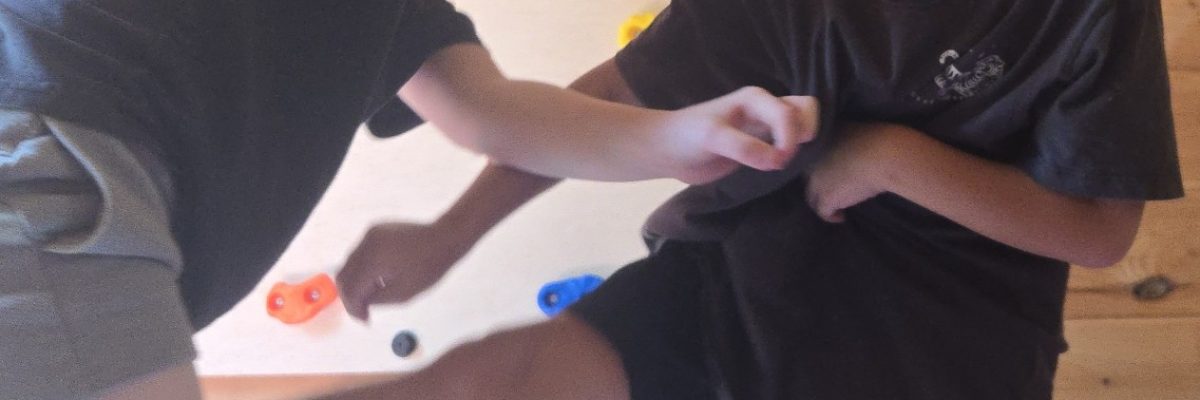
Most programs for children don’t allow roughhousing. They have a pretty strict hands-off policy, and I get it! We do allow roughhousing and fighting-type play at WonderWild, and it comes with a lot of complications. It’s stressful for me, for one thing! And sometimes kids do get hurt. However, the underlying benefits of roughhousing are so, so important, and I’m committed to keeping it as part of our program.
Types of Roughhousing Play
First, what exactly are we talking about?
Active, Physical Games
Some types of rough-and-tumble play are typical childhood activities that don’t raise too many eyebrows. These are activities like chasing, tag games, or giving piggyback rides. Or imagine pretending to be tigers or monsters with lots of growling and running away in mock fear.
Bouncing Off Of Each Other
Another group of activities involves more physical interaction but low risk for hurt bodies or feelings. Imagine them pretending to be airplanes or spinning machines, where there might be occasional crashes, but that’s not necessarily the point of the game.
Play Fighting
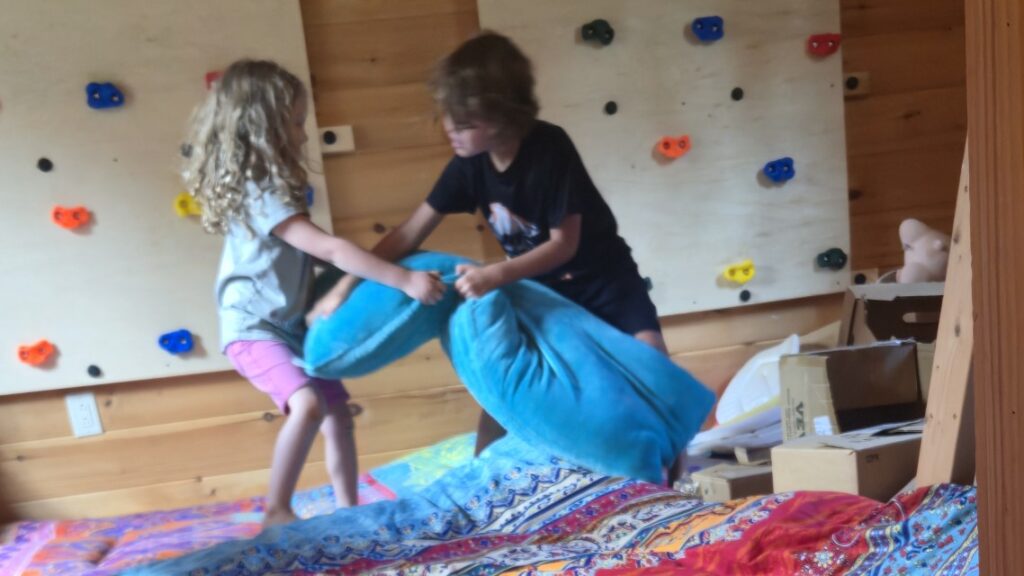
The most complicated type of roughhousing is play fighting. This can be with pretend weapons, like swords, or it can be full-contact wrestling. In these games, the point is to battle. Pushing, pulling, grabbing, and tackling each other is part of the fun.
Benefits
The positive effects of roughhousing play for children are almost too many to mention. As an educator who allows this type of play, I see the benefits in action, and the scientific research backs that up.
Cognitive and Physical Development
Roughhousing is good for the body and good for the brain!
Playing roughly with other people lets kids move their bodies around in new ways. They build balance, coordination, flexibility, and strength. They’re also developing spatial awareness and an overall sense of body awareness.
In a similar way, their brains get a workout, too. Roughhousing stimulates the brain, and research has shown that children who engage in positive roughhousing perform better in school. Rough-and-tumble play is often chaotic and unpredictable. It strengthens critical thinking, problem-solving, and creative thinking skills. Kids build their ability to think quickly and adjust to unexpected situations.
Emotional Growth
Roughhousing is a rich environment for enhancing emotional development. Kids learn a lot about themselves and build a stronger connection to their own inner landscape. For one thing, active, physical play burns off extra energy, releases tension, and relieves anxiety. Here are some other areas of growth:
- Boundaries: Roughhousing gives kids great practice at understanding their own limits and learning to speak up for their preferences.
- Self-control: Research has shown that children who have opportunities for roughhousing with family are less likely to be overly aggressive or engage in unsafe activities away from their parents. Roughhousing helps them understand the limits of their strength, learn to safely manage their high energy, and learn to move through intense feelings.
- Confidence & Resilience: Rough play gives children the opportunity to successfully navigate challenges, practice winning and losing, evaluate risks, and stick up for themselves. All of that comes together for a confident sense of self and the ability to see themselves as capable.
Social Development
For a group learning environment like WonderWild, the social aspect of roughhousing is where I see the most remarkable benefits. Kids who choose roughhousing are intensely focused on each other, and they want to keep the game going. They very quickly pick up on the skills needed to keep having this kind of fun. Here’s a breakdown of some of those skills:
- Understanding Roles: Roughhousing requires a commitment to turn-taking and understanding another person’s perspective. Kids also learn how to navigate and compensate for power imbalances.
- Reading Cues: Roughhousing builds empathy by teaching kids how to notice facial expressions and body language in others and how to accurately read others’ emotions.
- Connection: Kids become closer to each other emotionally when they can have intense experiences together in a safe environment. They feel shared joy and excitement, and they learn how to repair social disruptions as they happen.
- Cooperation & Consent: Roughhousing builds teamwork, teaching that other people have limits and preferences. Kids learn to work with those parameters in order to continue the game. They learn to respect personal space and listen when someone says “no” or “stop.”
- Communication: Co-creating an intense, physical, hands-on experience requires advanced communication skills. Children who want to roughhouse learn the language of negotiation, self-advocacy, and compromise.
My 15-year-old looked over my shoulder as I wrote the above section. If my writing is a little dry for you, here’s how he put it: “There’s no bonds greater than the ones forged in the heat of battle.“
Ground Rules
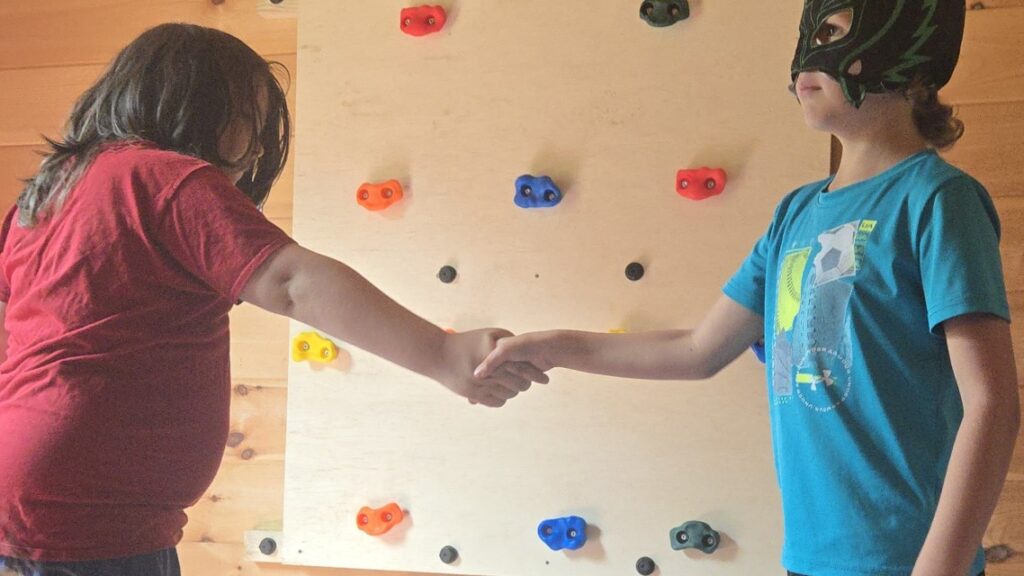
In order to safely access all those benefits, roughhousing does require attention to the rules and agreements that keep it fun for everyone. Roughhousing at WonderWild isn’t a free-for-all. We’re not running a Kid Fight Club over here! First, kids are always supervised. They are able to stretch their limits and enjoy this type of risk precisely because it’s a safe, supported environment for doing so. Additionally, there are lots of guidelines that we continually talk about.
Getting Started
A game involving someone else’s body should always start with asking them first. We don’t just start bonking into others without asking if they want to play that way.
Taking a few minutes to collaborate on the rules of the game helps prevent misunderstandings, hurt feelings, and hurt bodies. Some kids like hitting and kicking with each other; some don’t. Some kids like being jumped on; some don’t. “No scratching” and “no faces” are two rules I regularly hear the WonderWild kids suggest.
There are also a few adult-imposed rules that I insist on, including nothing around anyone’s neck, no covering someone’s mouth, and no biting. Sometimes I’ll impose limits to the number of participants or length of time for the activity to keep tensions from running too high and make supervision manageable for me.
In the Middle
While the roughhousing is happening, I encourage the kids to pay attention to themselves and to others. I say, “It’s only fun if everyone is having fun.”
How can they tell if everyone’s having fun? Regular check-ins are key. I encourage the kids to watch each other’s faces and wonder what the other person is feeling. Ask: “Are you still having fun?”
When I’m not sure but I don’t want to disrupt the flow, I’ll ask for a quick thumbs up or thumbs down from everyone.
If things seem to be getting a little too intense, I’ll ask everyone to pause and take a minute to assess and regroup. This pattern of pausing, checking in, and carrying on is a really valuable lifelong skill.
When To End
Ongoing consent is an important aspect of any game. It’s important to stop immediately when someone says “no” or “stop.”
I also remind everyone that we never act out of anger. If I see anyone starting to move from play fighting to real fighting, I end the activity immediately.
If anything goes wrong in the game, I encourage everyone to take care of each other. Providing comfort, care, and friendship is an important aspect of rough-and-tumble play.
References
If you’d like to learn more about the benefits of roughhousing for children, here are some of the references I used to write this article. (WonderWild earns a small commission if you purchase through one of these Amazon links.)
- Unplug and Play: The Ultimate Illustrated Guide to Roughhousing with Your Kids by Anthony T. DeBenedet MD and Lawrence J. Cohen PhD introduces parents to the benefits of physical play, present dozens of illustrated activities for children and parents to enjoy together, and incorporates new child development research.
- A Moving Child Is a Learning Child: How the Body Teaches the Brain to Think by Gill Connell and Cheryl McCarthy explores current research and best practices about brain activity, motor and sensory development, movement, and early learning.
- Children’s Rough-and-Tumble Play in a Supportive Early Childhood Education and Care Environment
Study